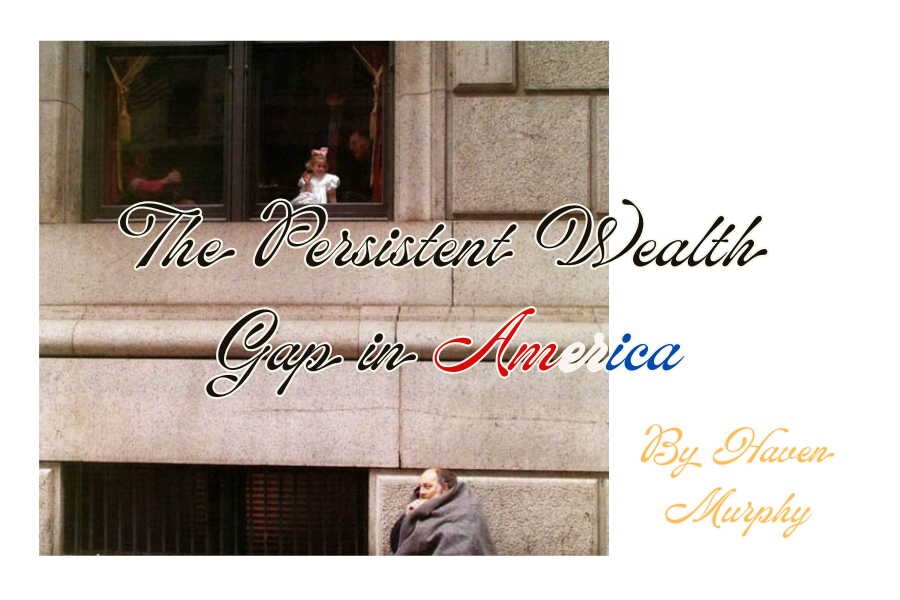
A division in wealth among people has always been a prominent, global crisis. As the world develops, many countries experience an increase in this division, which is referred to as a wealth gap. In America, the difference in wealth and financial growth and advantage has increased significantly since the 1980s, especially following the 2008 financial crisis. This increase in financial growth benefits the wealthiest people and households in the country, which only consists of one percent of the population in America.
As the cost of living continues to increase while wages remain the same, most Americans are bringing home less money. According to Inequality.org, the top one percent averages over 130 times more income than the bottom 20 percent in 2021 (collectively.) To put this difference in perspective, the average income of the bottom 20 percent is roughly $40,000 a year. That is over 100 million Americans compared to about 1.2 million in the top one percent. For the majority of people in the country who are a part of the working class and make around $40,000-60,000 a year, the difference between the top one percent is significantly larger. The gap in wealth between the top one percent and the working class does not just revolve around numbers, but concerns numerous crucial aspects of life and the wellbeing of most in America.
The wealth gap increases as tax cuts are given to the wealthy, assets and inflation increase and money is hoarded in masses rather than being put in the flow of the economy, while wages remain stagnant. Essentially, the rich make more money, the cost of living increases, yet wages remain the same. Money goes into everything we know and experience, even if it is not coming directly from our pockets (at will, I mean). This includes necessities like public projects, safety services and infrastructure. When the richest in the nation are given tax cuts, these necessities are still in demand in terms of the people using them as well as the money that needs to go into them. However, if those who can afford to are not contributing in paying for them, two consequences occur. Either the money comes from those who do not have as much or the service disappears and decreases in quality. A relevant example of this is the recent budget cuts that are established by the Trump Administration targeting allegedly “woke” programs, such as the Community Services Block Grant, which addresses poverty at the community level. This three page list provided by the White House details numerous other programs that benefit the working class of the country that are subject to elimination.
If those who struggle to financially support themselves or their households can hardly contribute to parts of society like public projects and events, then aspects to society like community and generally positive wellbeing are put beneath the wealthy and profit. According to the Tax Policy Center, over half of federal revenue comes from individual income taxes. K-12 education faces federal funding cuts under the current administration. For something like public school, that many may not pay for out of pocket but instead through taxes, funding cuts serve no benefit to anyone but the wealthy and businesses. Profit being put above education and human services emphasize the apathy and disregard of the wellbeing of the working class that surrounds the wealth gap in America.