
With the birth of our modern film industry, hand-drawn animation has been a major contributor to global culture. An indicator and method of distribution of ideas and values of a society, looking back on historical animation offers the unique opportunity to see into the mind of artists in a manner that nearly comes to life in its movement.
Today I’ll be focusing on Croatian animator Zlatko Bourek and his works as they relate to depictions of war. Art is, in my opinion, one of the clearest indications of how a population views society and life. Bourek’s works in particular are very interesting in how they relate to the ideas and values of Croats in the 1960s, ‘70s, ‘80s, and ‘90s.
Zlatko Bourek was an animator under Zagreb Film, an animation company, starting in 1956 that struck my interest several years ago when I came across a YouTube channel uploading old films from a variety of artists throughout the 70+ years of the company’s existence. His intense, surrealist style presents many elements of reality as grotesque and sexual at times, whilst still being relatable and thought provoking.
One of Bourek’s most famous works is titled, “Ručak” (1978). Meaning “dinner” in English, upon initial viewing, the bizarre visuals may leave audiences confused or put off. However, with the added perspective of Bourek’s Jewishness and his lived experience of the Holocaust–a topic that was prevalent in many of his works–a clear plot emerges.
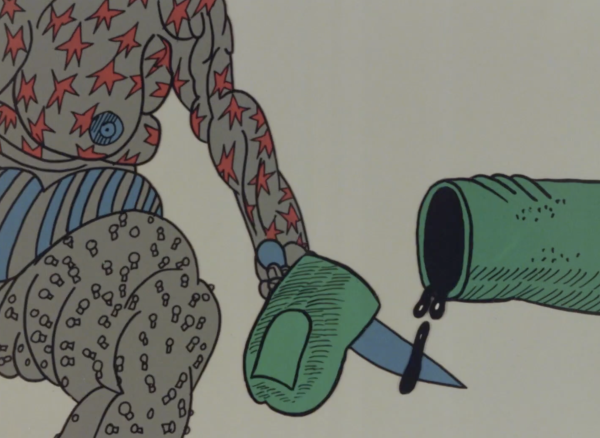
Featuring a figure plagued with traumatic memories of a very intense war: Ručak depicts bloody fingers and phalluses that fly through the sky, gaudy deportation wagons with unending lines of figures climbing inside, dark liquid consuming otherwise normal scenes of meals or homes, mutilated figures covered in blood and bandages and imposing humanoid-helicopters. Such wrenching visuals contrast the calm, recurring image of the individual recalling such events, a man sitting at his dining table in a plain room with a bowl of soup.
In addition to his artistic ability, something that drew me to Bourek’s works was the sound design. There are very intentional sound choices in every one of his animations, and in “Ručak” in particular, there are auditory cues for the audience that further the story being shown. Air-raid sirens blare throughout the sequence and panicked music in rough tones pairs to the intense imagery being shown. “Ručak” is a clear depiction of the Holocaust from a survivor, and speaks to a society facing additional threats of the Cold War’s potential escalation.
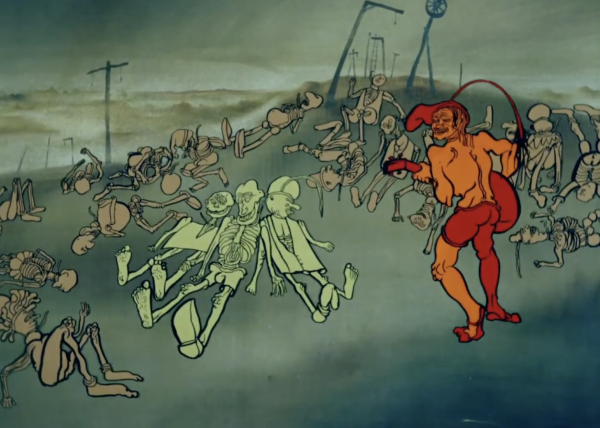
One of Bourek’s earlier works, “I videl sem daljine meglene i kalne…” (1964), depicts scenes of medieval Croatia–particularly class differences and figurative battles turned literal. In this 11 minute short film, the narrator is a jester/bard sort of figure, leading the audience through several sequences. Most notably depicted are a battle that destroys a village in its entirety, as well as a scene featuring the narrator cutting the remains of a large number of hanged individuals down from their racks, then reanimating them, creating a dancing troupe of the dead. Even in death, however, the overpowering force that had initially destroyed the villages terrorizes the people, displaying the seemingly hopeless sensation of being trapped.
The 1960s brought on a period of cultural flourishing for Croatia, but also political unrest. Until its independence in 1991, Croatia had been a republic within the State of Yugoslavia. Though it adapts poems featured in “The Ballads of Petrica Kerempuh”–a collection discussing classism and ethnic differences of the Yugoslav region and tells a story focused on events taking place in the 1600s–the themes of “I videl sem daljine meglene i kalne…” would’ve reflected Bourek’s contemporary audiences’ and their feelings of oppression and restriction by an overarching government.
Bourek is just one of many hundred thousand artists who have depicted war and its effects in art, but his character design and direction provide a particularly interesting watch, regardless of subject matter.