
On Jan. 3, 2026, US military forces bombed Venezuela and captured the country’s leader, Nicolás Maduro, and his wife, Cilia Flores. The attack was targeted towards the city’s capital, Caracas, which lasted less than 30 minutes. For many, this intervention happened so suddenly and out of the blue. Though, there were several factors between the United States and Venezuela that escalated to this catastrophic event.
Trump signed an executive order on Jan. 20, 2025 that labeled outsider criminal groups as “foreign terrorist organizations.” One of these groups included in this was Tren de Aragua, a street gang located in Venezuela. Aug. 19, 2025, the US military deployed three missiles into Venezuelan waters and on Sept. 2, the US would make their first attack on a departing Venezuelan vessel operated by Tren de Aragua. From September to December of last year, The US military imposed a total of 30 known strikes against several Venezuelan boats, killing around 107 people on board. All attacks were made behind the accusations that they were smuggling illegal drugs. On Dec. 30, 2025 a drone strike hit a docking area allegedly used by Venezuelan drug cartels. It is believed that it was done by the CIA, though Trump offered few details of who exactly was behind it despite confirming it was perpetuated by the US. On New Year’s day, Maduro appeared on a televised interview addressing the United States directly stating the rights of Venezuela as a nation, and expressing “peace not war.”
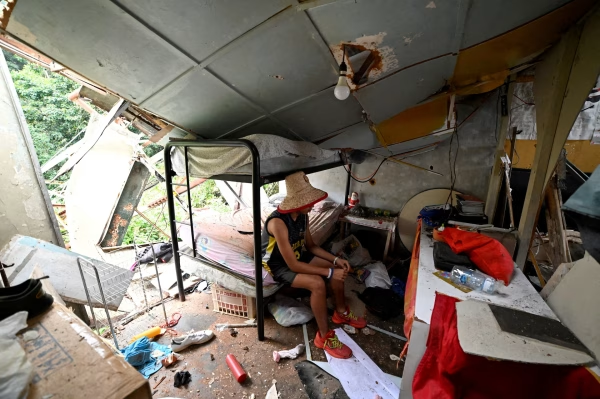
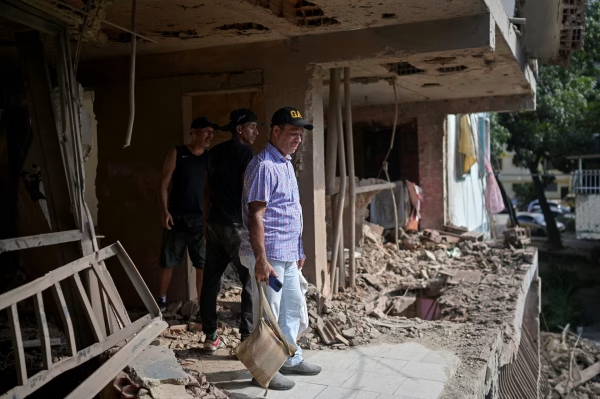
The aftermath of this attack and capture has left the Venezuelan people with a mix of emotions. The majority of civilians are in fear for their safety and the future of the nation. Regarding Nicolás Maduro, the opinions seem to be divided. Some citizens demand that Maduro and his wife be brought back while others express happiness that the country is free from a dictatorship. The physical damage resulting from Jan. 3 has led to many homes being completely destroyed. Citizens have been seen searching through rubble for their personal belongings. While also grieving the death and injuries of family members from the strikes.
In order to gain a true perspective on this US invasion, I initiated a short interview with a Venezuelan student here at John Adams. Ivan Martinez is a current senior who is from Maracaibo, San Francisco. All of his family and immediate relatives have left the country due to its insufficient state: “Venezuela is a mess with super duper hyper inflation and extreme poverty. Politically unstable as it was ruled under a dictator who opposed democracy.” Martinez also stated how his family left to seek out financial opportunities, a more stable source for food and an overall higher quality of life. The reactions from Martinez and his family was expected shock but also a similar feeling of happiness of Maduro’s capture just like other Venezuelans: “My reaction was a combination of disbelief and slight joy knowing Maduro was gone. My family felt the same way. Many Venezuelans support U.S. actions. However I feel that relations will get tense further and further.” The overall consensus from Martinez and his family is that while they feel relieved from the halt of the authoritarian government, there is worry and uncertainty for the future of Venezuela the US has disrupted.
In summary, the impact this attack has had on the Venezuelan people appears to be both positive and negative depending on the person. Supporters of Nicolás Maduro and his ideals may result in a more terrible impact, while those who opposed Maduro view the situation as an opportunity and direction toward democracy. Though both sides can come to an agreement that this US involvement will create more future events in Venezuela.